Tag game
Ant Tag
Tagged? Then you lie on your back like an ant until four children carry you to a mat.
Source: Combinatiefunctionarissen Sport van de gemeente Zwartewaterland
Ages 8–12 20 min PE hall, Playroom, Outdoors
One on one: the dodger tries to get past the tagger to the other side using fake moves.
Source: Playworks Game Guide
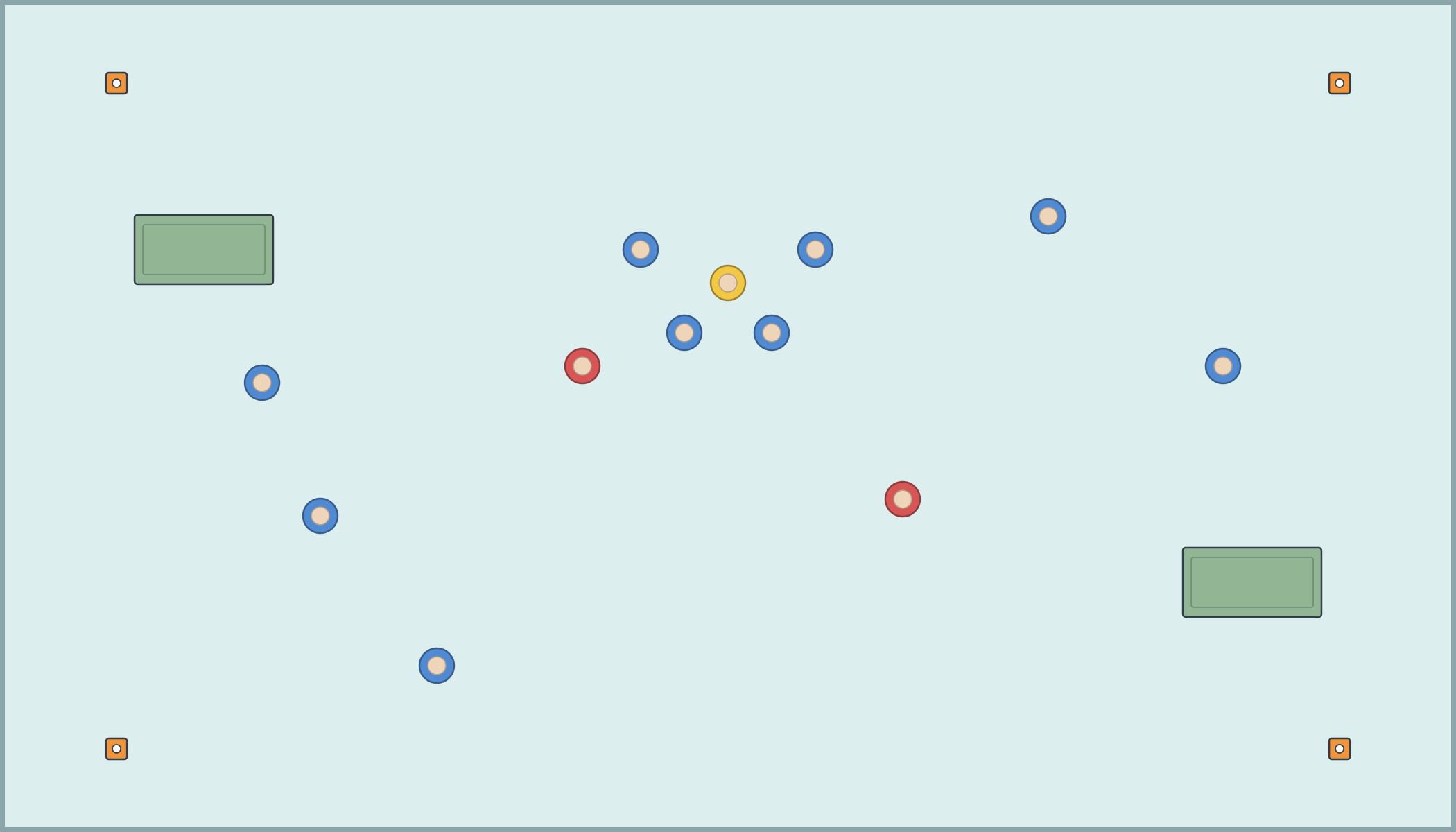
Whole hall · 21 × 12 m · 10 items
What you need
Two lines stand opposite each other at the short ends of the area: dodgers and taggers. In turn, the front player of each line goes into the area; the dodger tries to get to the other side using fake moves without being tagged, and the tagger tries to tag them with two hands.
Keep the line a few metres behind the start line, so waiting players don't get in the way of those who are playing.
The same game has to work for 6-year-olds and 11-year-olds. These are the dials you can turn.
If play is safe, let the area grow and send two or three pairs at the same time.
Give each tagger the chance to try to tag two different dodgers.
Have players start from a low crouch instead of standing.
Based on the Dutch national PE curriculum (SLO), this lesson practises the following themes. The goals below belong to phase 3 · ages 9–12.
Tag games
Chasing a runner to tag them, while the runner tries not to be tagged
Dodgeball games
Threatening a runner by trying to hit them with a ball, while the runner tries not to be hit
Source: SLO, Inhoudslijnen primair onderwijs — Bewegingsonderwijs (July 2018). The link with this lesson is a suggestion based on the type of game and the description.
Tag gently only — a 'butterfly tag' with fingertips on the shoulder or back. No grabbing, pushing or hard tags.
Verified teachers or guests (after approval) — real experiences
Not signed in?
Sign in with your school email address, or continue without an account — a moderator will then check your post before it appears.
Loading reviews…
Tagged? Then you lie on your back like an ant until four children carry you to a mat.
Source: Combinatiefunctionarissen Sport van de gemeente Zwartewaterland
If you're tagged you freeze like a banana, and you're only free again when two classmates each pull one arm down.
Source: Let's Leap Sports Academy
Tagged? Take a beanbag from the middle and throw it underarm into a bucket to be free again.
Source: Let's Leap Sports Academy