Running game
Card Relay
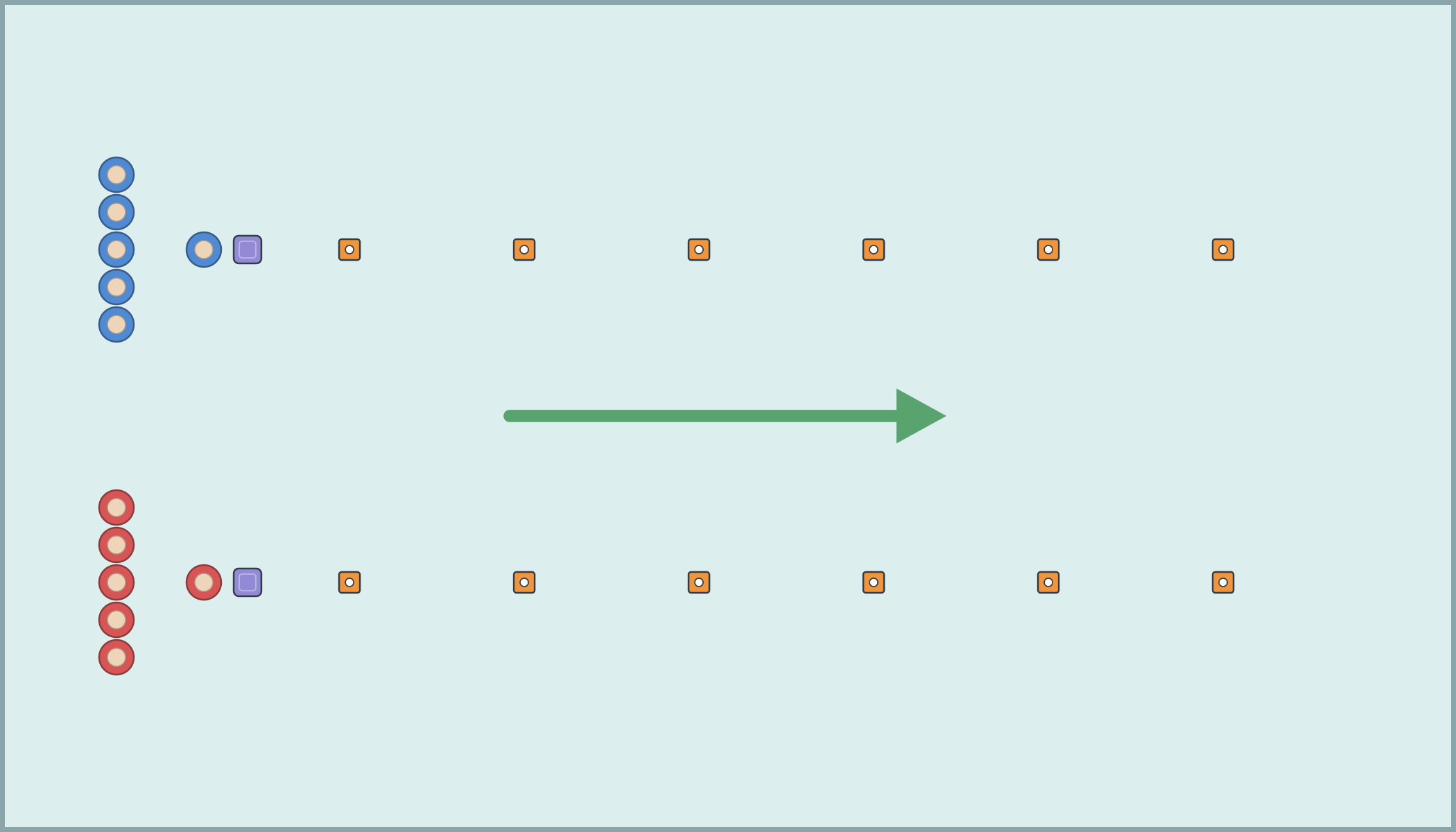
Run to the mat, turn over a card and hope for your own suit.
Source: Combinatiefunctionarissen Sport van de gemeente Zwartewaterland
Ages 8–12 30 min PE hall, Playroom, Outdoors
Small groups throw and catch a frisbee over increasing distances, in seven lanes side by side.
Source: Tristan Galle
Whole hall + lines · 21 × 12 m · 77 items
What you need
This is the main part of a frisbee lesson. The hall is divided into seven lanes, and in each lane four marker spots, A, B, C and D, are laid about three metres apart. A group of three pupils stands on A, B and C, and the frisbee lies in the hoop at A. The frisbee goes from A to B and from B to C. After a few throws the group rotates positions, so everyone throws and catches from every spot; anyone who is doing well steps one spot further back to D for a longer throw. Neighbouring lanes throw in opposite directions, so the frisbees do not cross. All lanes are busy at the same time, so nobody is standing around waiting.
All seven lanes are busy at the same time, so there is no queue. Give the lanes a colour using the bibs, so pupils know straight away where they are after rotating. Have neighbouring lanes throw in opposite directions; this stops frisbees crossing. With 22 pupils you have seven groups of three and one left over: let that pupil help the teacher with counting or add them to one of the lanes.
The same game has to work for 6-year-olds and 11-year-olds. These are the dials you can turn.
Reduce the distance between the spots, use a soft frisbee or a light foam ring, and have the throw bounce or roll once first.
Throw from the furthest spot (D), catch with one hand, or have the pupil run round a cone after the throw first.
Have the lanes compete against each other: which group is first to ten catches, or to pass the frisbee from A to C and back three times without dropping it?
Throw not to a pupil but to a hoop on the floor at B or C, and count how often the frisbee lands inside the hoop.
Based on the Dutch national PE curriculum (SLO), this lesson practises the following themes. The goals below belong to phase 3 · ages 9–12.
Tag games
Chasing a runner to tag them, while the runner tries not to be tagged
Dodgeball games
Threatening a runner by trying to hit them with a ball, while the runner tries not to be hit
Running to get somewhere as fast as possible
Aiming
Playing an object away so that it lands in or hits a target as accurately as possible
Throwing and hitting far
Playing an object away as hard and/or as far as possible
Source: SLO, Inhoudslijnen primair onderwijs — Bewegingsonderwijs (July 2018). The link with this lesson is a suggestion based on the type of game and the description.
A spinning frisbee can arrive hard: do not throw higher than shoulder height and never throw to someone who is not looking. No walking between lanes while there are frisbees in flight. Use soft or foam frisbees for younger pupils. Keep the spots and hoops on the floor out of the walking routes.
Verified teachers or guests (after approval) — real experiences
Not signed in?
Sign in with your school email address, or continue without an account — a moderator will then check your post before it appears.
Loading reviews…
Run to the mat, turn over a card and hope for your own suit.
Source: Combinatiefunctionarissen Sport van de gemeente Zwartewaterland
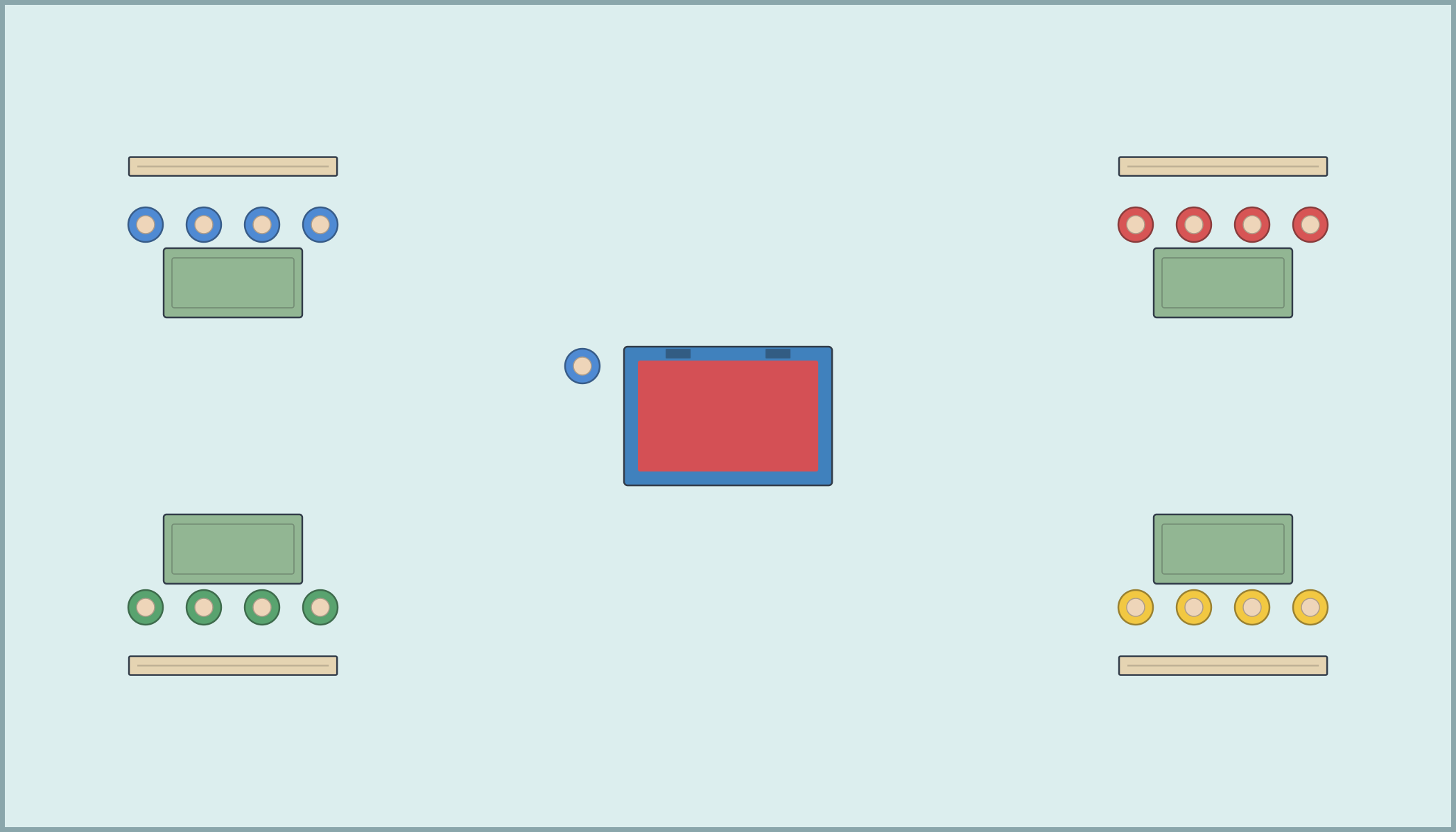
The dice decides how far you have to go. Roll a six and it's a long way.
Source: Combinatiefunctionarissen Sport van de gemeente Zwartewaterland
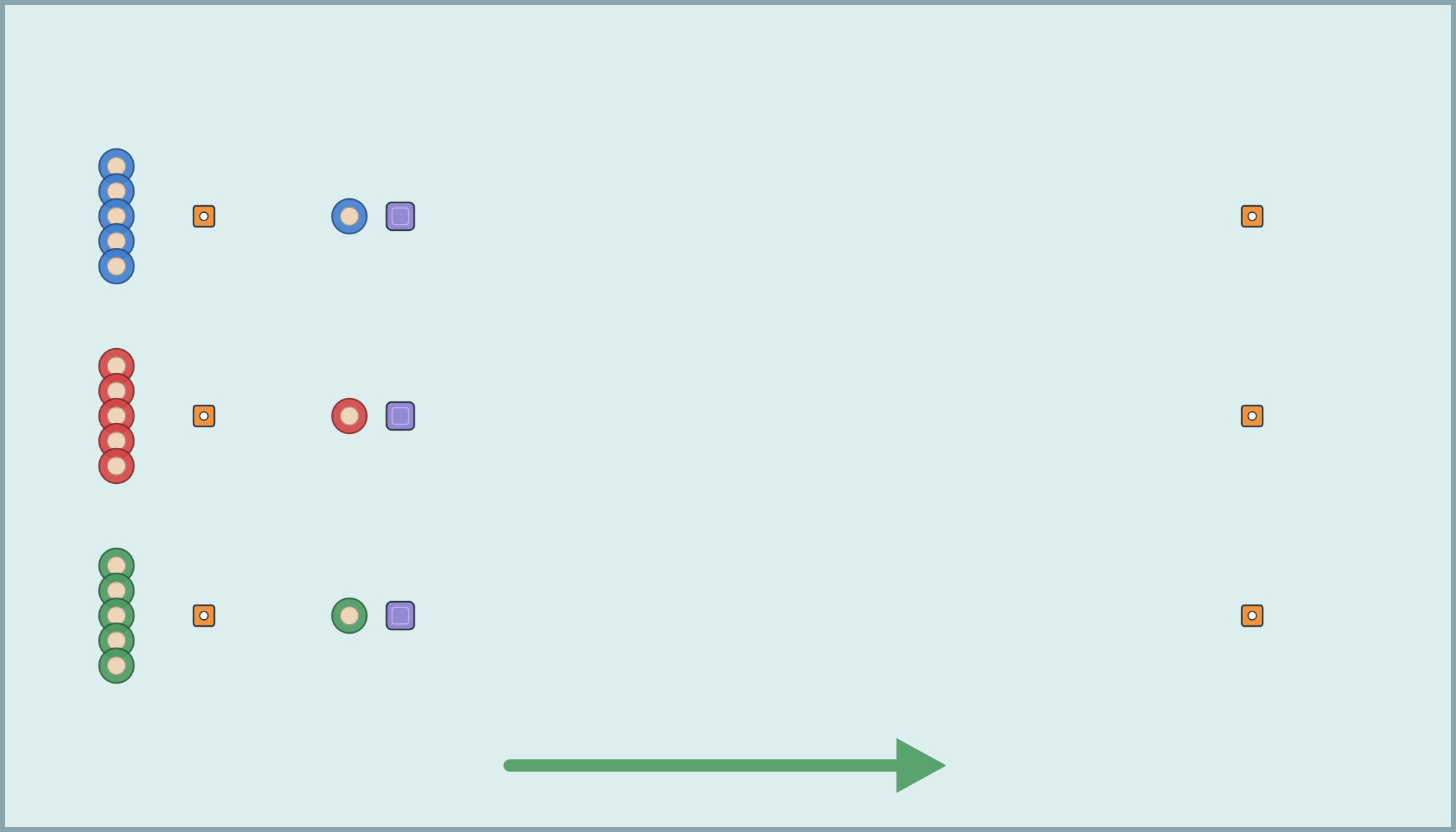
The classic relay, with attention to the changeover: the baton into the next player's hand.
Source: Combinatiefunctionarissen Sport van de gemeente Zwartewaterland