Running game
Dice Relay
The dice decides how far you have to go. Roll a six and it's a long way.
Source: Combinatiefunctionarissen Sport van de gemeente Zwartewaterland
Ages 4–12 30 min PE hall, Playroom, Outdoors
Two teams jump like frogs from lily pad to lily pad, to the finish and back.
Source: EDCP 320 — Quick and Easy PE Activities for Primary Teachers
Whole hall · 21 × 12 m · 22 items
What you need
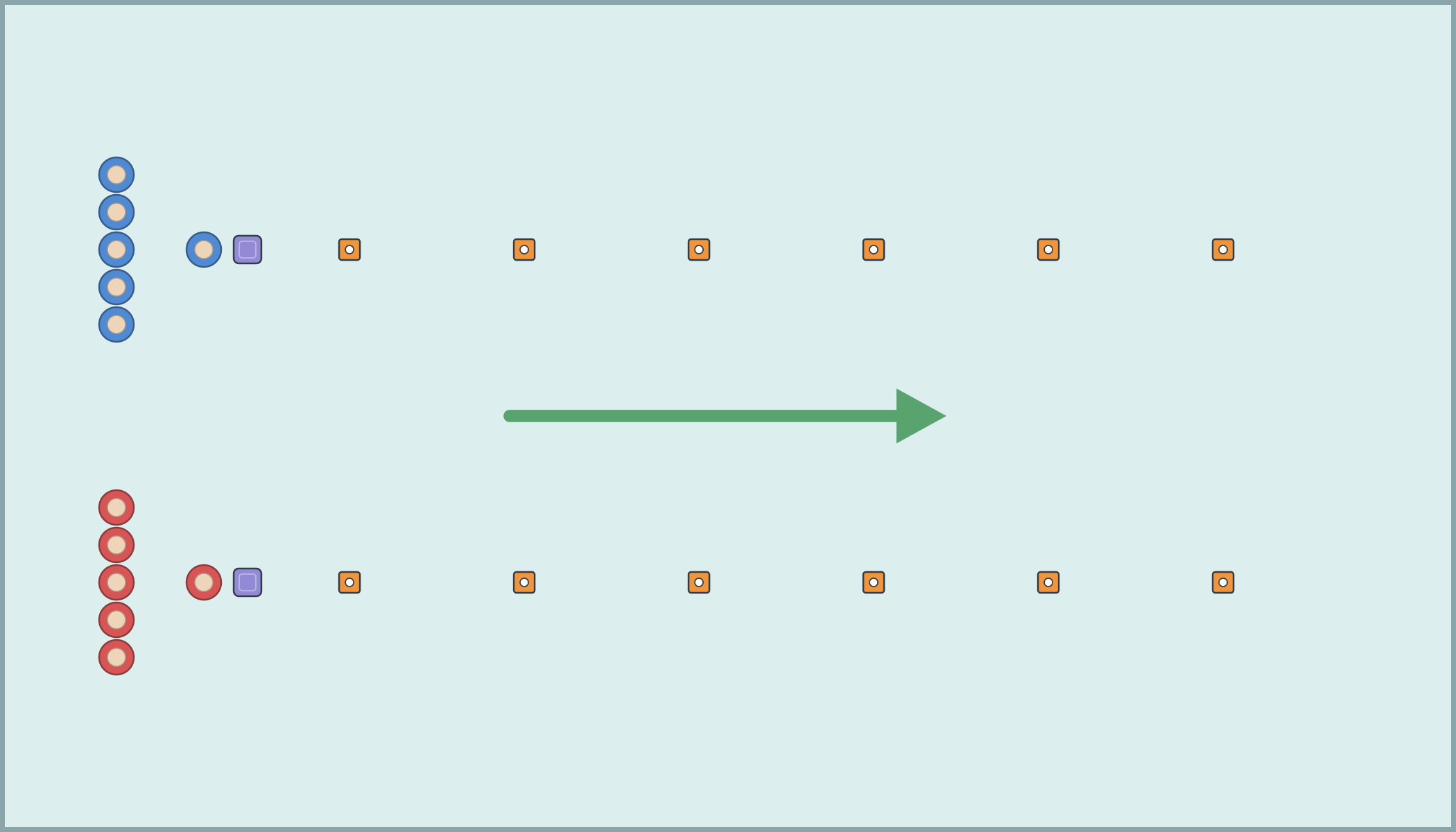
Between the start and the finish are two rows of ‘lily pads’ (hoops), one row per team. On the start signal, the first child in each team jumps low through the knees from lily pad to lily pad to the finish, and runs back to the line to tag the next player.
Practise the frog jump together first without relay pressure, so the technique does not get lost once it gets exciting.
The same game has to work for 6-year-olds and 11-year-olds. These are the dials you can turn.
Turn it into a race: which team is the first to get everyone round?
Have the children hop on one leg from lily pad to lily pad instead of using two feet.
Sing a frog song together while jumping – it keeps the rhythm going and the mood light.
Based on the Dutch national PE curriculum (SLO), this lesson practises the following themes. The goals below belong to phase 3 · ages 9–12.
Free jumping
Taking off to stay in the air for a long time
Vaulting
Taking off to stay in the air for a long time before and/or after placing your hands on a support
Running to get somewhere as fast as possible
Source: SLO, Inhoudslijnen primair onderwijs — Bewegingsonderwijs (July 2018). The link with this lesson is a suggestion based on the type of game and the description.
Make sure the landing area has no slippery floor or obstacles, and have children jump with bent knees and a soft landing.
Verified teachers or guests (after approval) — real experiences
Not signed in?
Sign in with your school email address, or continue without an account — a moderator will then check your post before it appears.
Loading reviews…
The dice decides how far you have to go. Roll a six and it's a long way.
Source: Combinatiefunctionarissen Sport van de gemeente Zwartewaterland
On the path you meet an opponent — whoever wins rock-paper-scissors keeps going, whoever loses goes to the back of their own line.
Source: Playworks Game Guide
Pass on the soft chicken and sit in your classmate's place – how quickly can the whole class find a new seat again?
Source: Playworks Game Guide