Apparatus
Climbing Ladders, Table Tennis & Newspaper Throwing
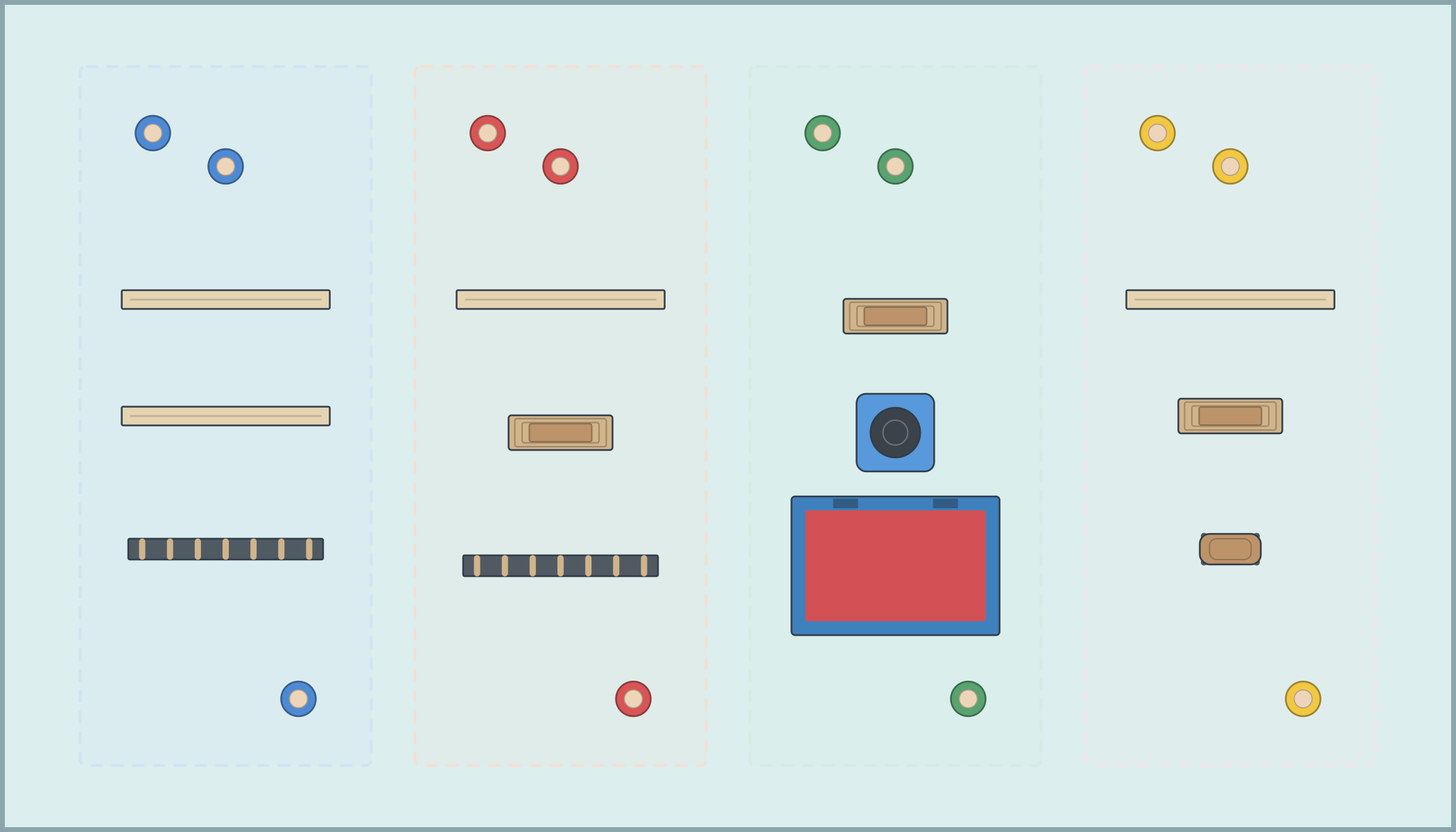
Five stations: ladders, table tennis, newspaper throwing, rope climbing and skipping.
Source: Harry van der Meer & Dennis Louter (gymlessenbasisonderwijs.nl)
Ages 6–12 45 min PE hall
Not taking turns, but really jumping at the same time in the same rope — from facing each other to a whole human chain.
Whole hall · 21 × 12 m · 9 items
What you need
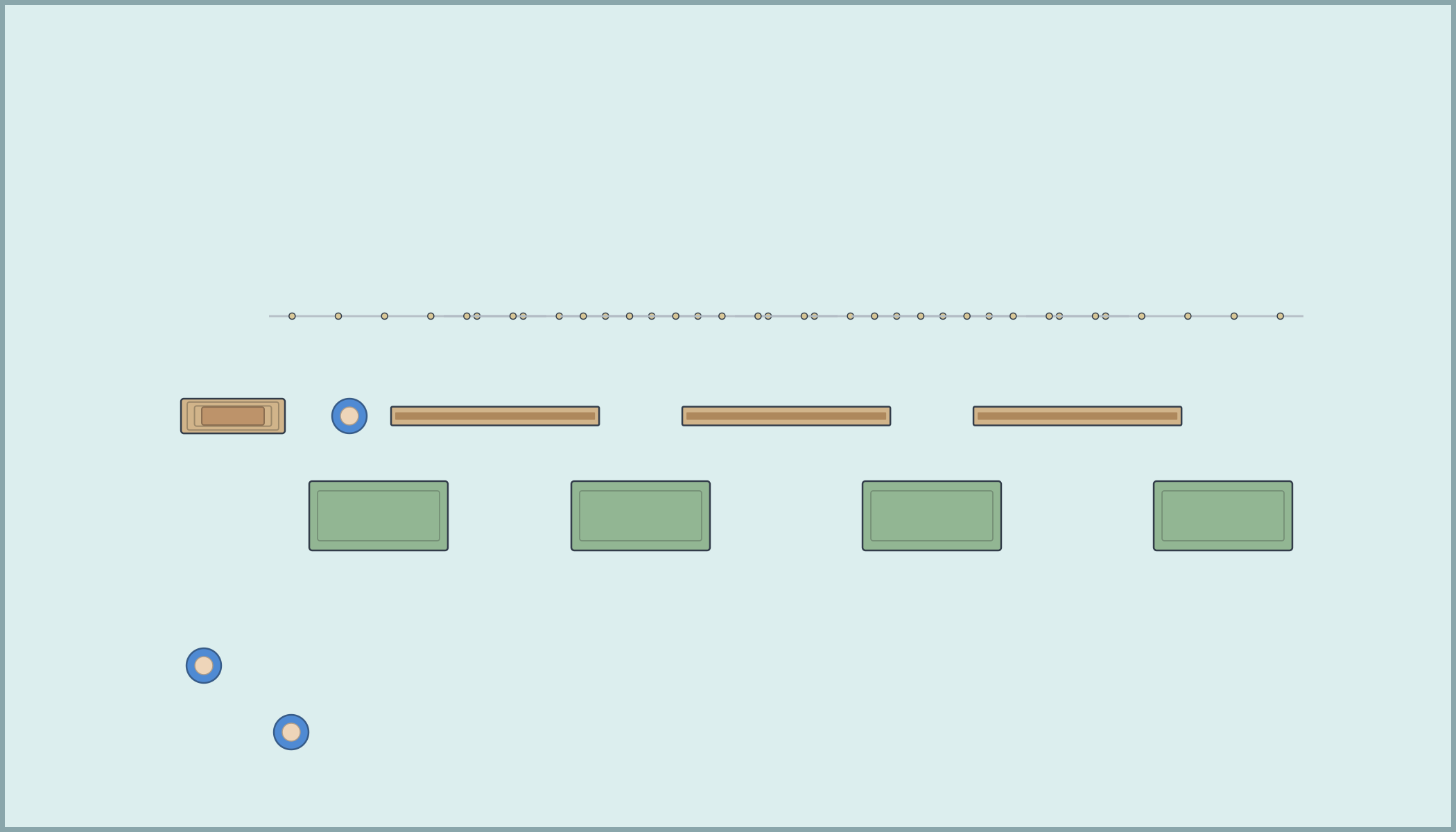
These cooperation challenges are for pupils who already have the basic jump well under control: here two (or more) people jump at the same time in the same rope, not in turns. Start simple with two jumpers facing each other in one rope, taking turns turning. Build up to two jumpers side by side in one rope — and for those who master that, even with two ropes at once. The biggest challenge is jumping in: a second jumper joining the first while they are jumping, without disrupting the rhythm. Agree beforehand who counts, who turns the rope and who jumps in first. For the real stars there is 'the chain': a whole group that agrees together how to jump in the same rope in turn.
Let groups choose for themselves when they switch jump type, instead of having the whole class move on at the same time.
The same game has to work for 6-year-olds and 11-year-olds. These are the dials you can turn.
Have two jumpers side by side each turn their own rope instead of sharing — that is easier to learn than really sharing the same rope.
Have the turners turn extra slowly until jumping in has worked a few times.
Start the chain with three pupils instead of the whole class, and then expand.
Based on the Dutch national PE curriculum (SLO), this lesson practises the following themes. The goals below belong to phase 3 · ages 9–12.
Free jumping
Taking off to stay in the air for a long time
Vaulting
Taking off to stay in the air for a long time before and/or after placing your hands on a support
Moving to music
Moving to the tempo of the music: matching the tempo and rhythm of your movement to the tempo and rhythm of the music
Performing a dance to music
Performing different movement patterns to music
Source: SLO, Inhoudslijnen primair onderwijs — Bewegingsonderwijs (July 2018). The link with this lesson is a suggestion based on the type of game and the description.
Leave plenty of distance between the groups, especially with the longer ropes — they have a bigger swing radius than an individual rope.
Verified teachers or guests (after approval) — real experiences
Not signed in?
Sign in with your school email address, or continue without an account — a moderator will then check your post before it appears.
Loading reviews…
Five stations: ladders, table tennis, newspaper throwing, rope climbing and skipping.
Source: Harry van der Meer & Dennis Louter (gymlessenbasisonderwijs.nl)
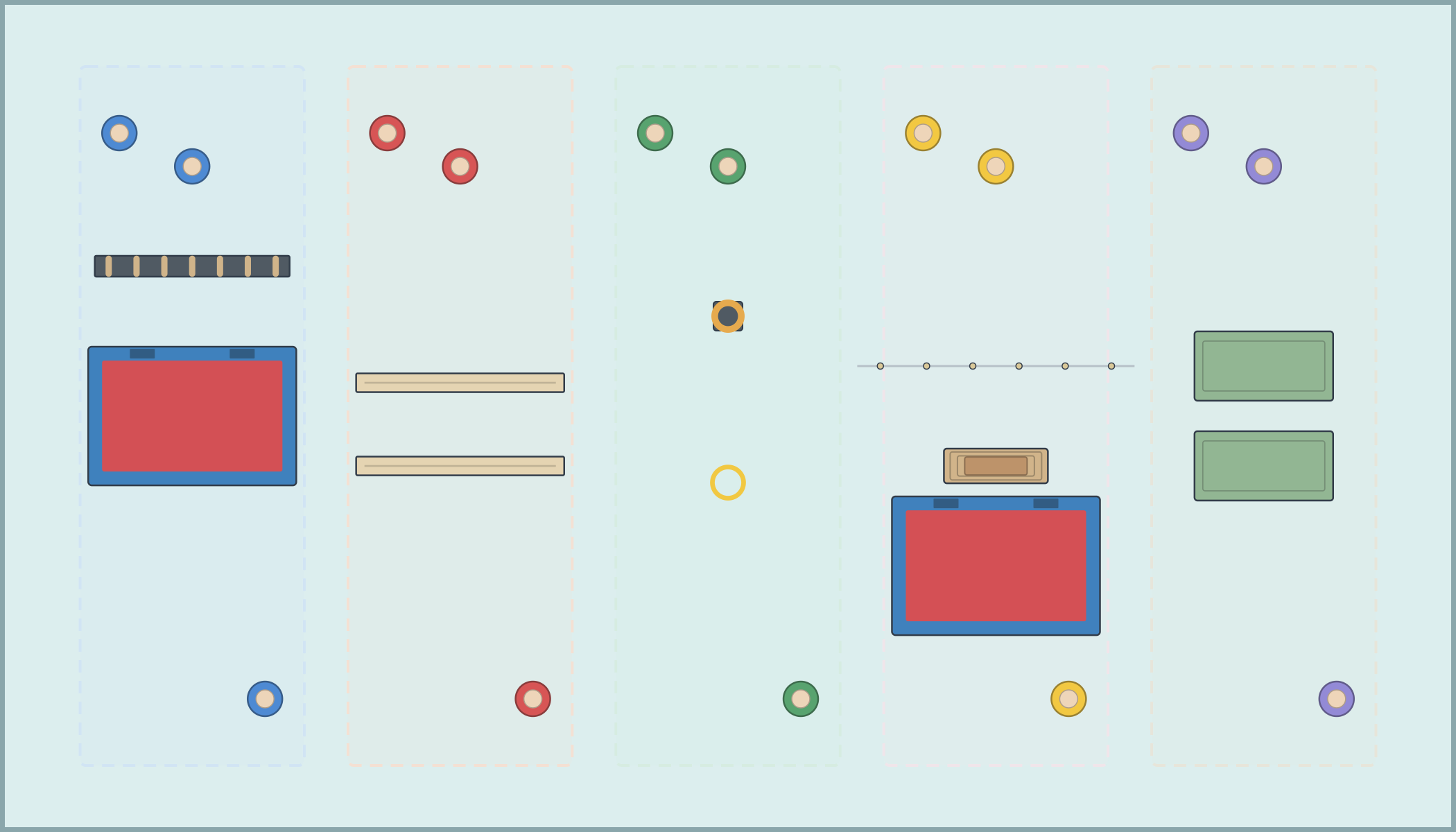
Four movement courses side by side, which you link together at the end.
Source: Harry van der Meer & Dennis Louter (gymlessenbasisonderwijs.nl)
Balance over benches hanging from the climbing ropes, without touching the floor.
Source: OBS Hobbitstee (2X44 Productions)