Running game
Bird Nests
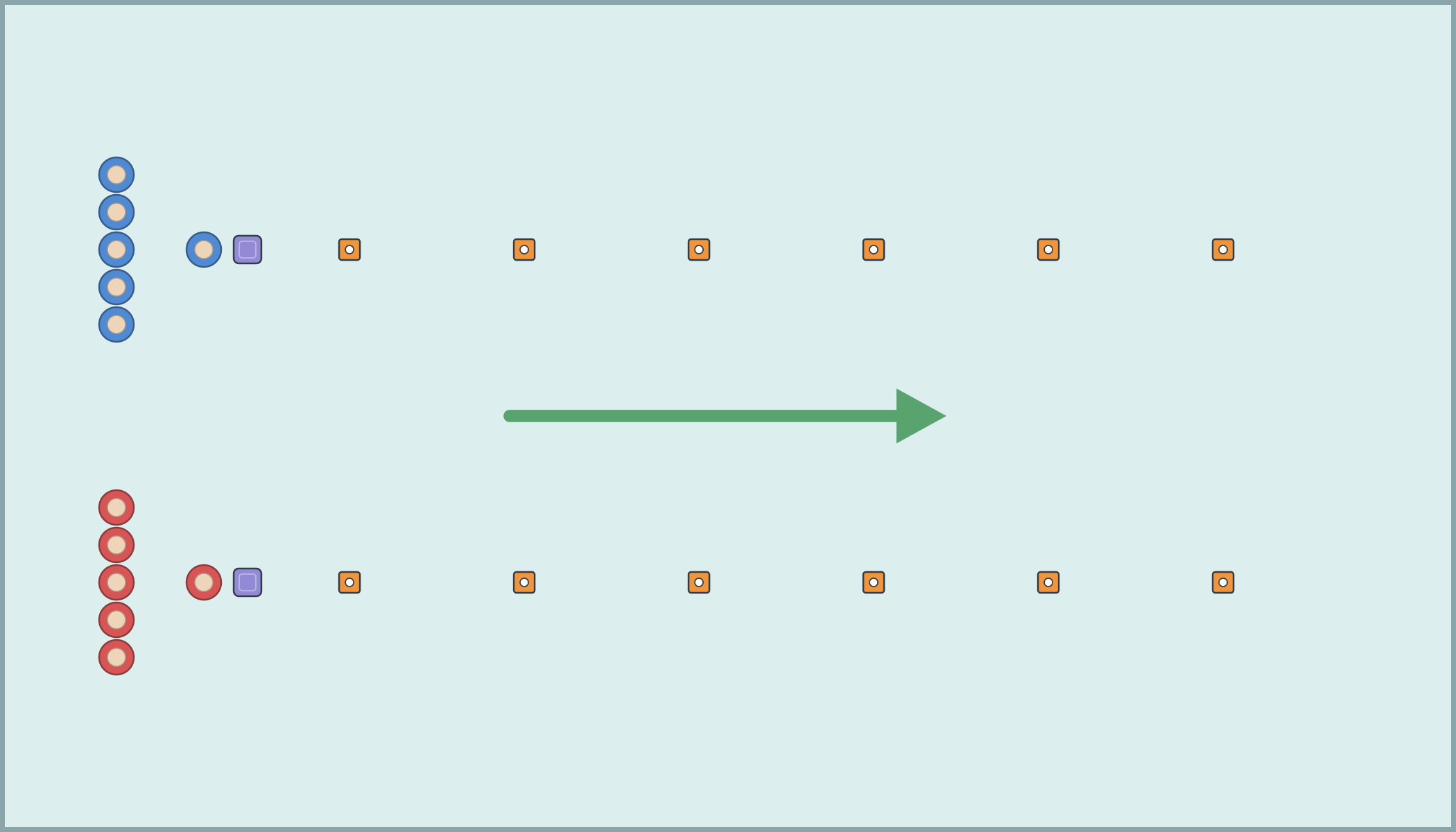
Four teams take turns running to the shared 'cookie jar' to get six cookies into their own nest.
Source: Playworks Game Guide
Ages 4–12 12 min PE hall
Hide within ten seconds. The seeker stays on the mat and calls out who they see.
Source: Combinatiefunctionarissen Sport van de gemeente Zwartewaterland
Whole hall · 21 × 12 m · 17 items
What you need
One child stands on the crash mat, closes their eyes and calls out: "Ten seconds in the jungle, ten, nine, eight..." From that moment the rest look for a hiding place. At zero the seeker opens their eyes and looks from the mat; they are not allowed to leave it. If they spot someone, they call out that child's name and that child has been found. Each player found costs a cone, so you can see from the side how well everyone hid. Make sure there is enough equipment to duck behind.
Depending on the quality of the attackers and the defenders, the teacher can set the rules for winning the activity. If the defenders are too good, you could choose, for example, to have only 5 of the 10 blocks knocked over. With weaker defenders it can be raised to, for example, 11 of 12.
The same game has to work for 6-year-olds and 11-year-olds. These are the dials you can turn.
More equipment to hide behind.
Based on the Dutch national PE curriculum (SLO), this lesson practises the following themes. The goals below belong to phase 3 · ages 9–12.
Tag games
Chasing a runner to tag them, while the runner tries not to be tagged
Dodgeball games
Threatening a runner by trying to hit them with a ball, while the runner tries not to be hit
Source: SLO, Inhoudslijnen primair onderwijs — Bewegingsonderwijs (July 2018). The link with this lesson is a suggestion based on the type of game and the description.
Make sure pupils tag with a flat hand and keep their distance from obstacles.
Verified teachers or guests (after approval) — real experiences
Not signed in?
Sign in with your school email address, or continue without an account — a moderator will then check your post before it appears.
Loading reviews…
Four teams take turns running to the shared 'cookie jar' to get six cookies into their own nest.
Source: Playworks Game Guide
The dice decides how far you have to go. Roll a six and it's a long way.
Source: Combinatiefunctionarissen Sport van de gemeente Zwartewaterland
A relay in which each child in turn takes one 'treat' to the other food bowl.
Source: Playworks Game Guide