Running game
Bird Nests
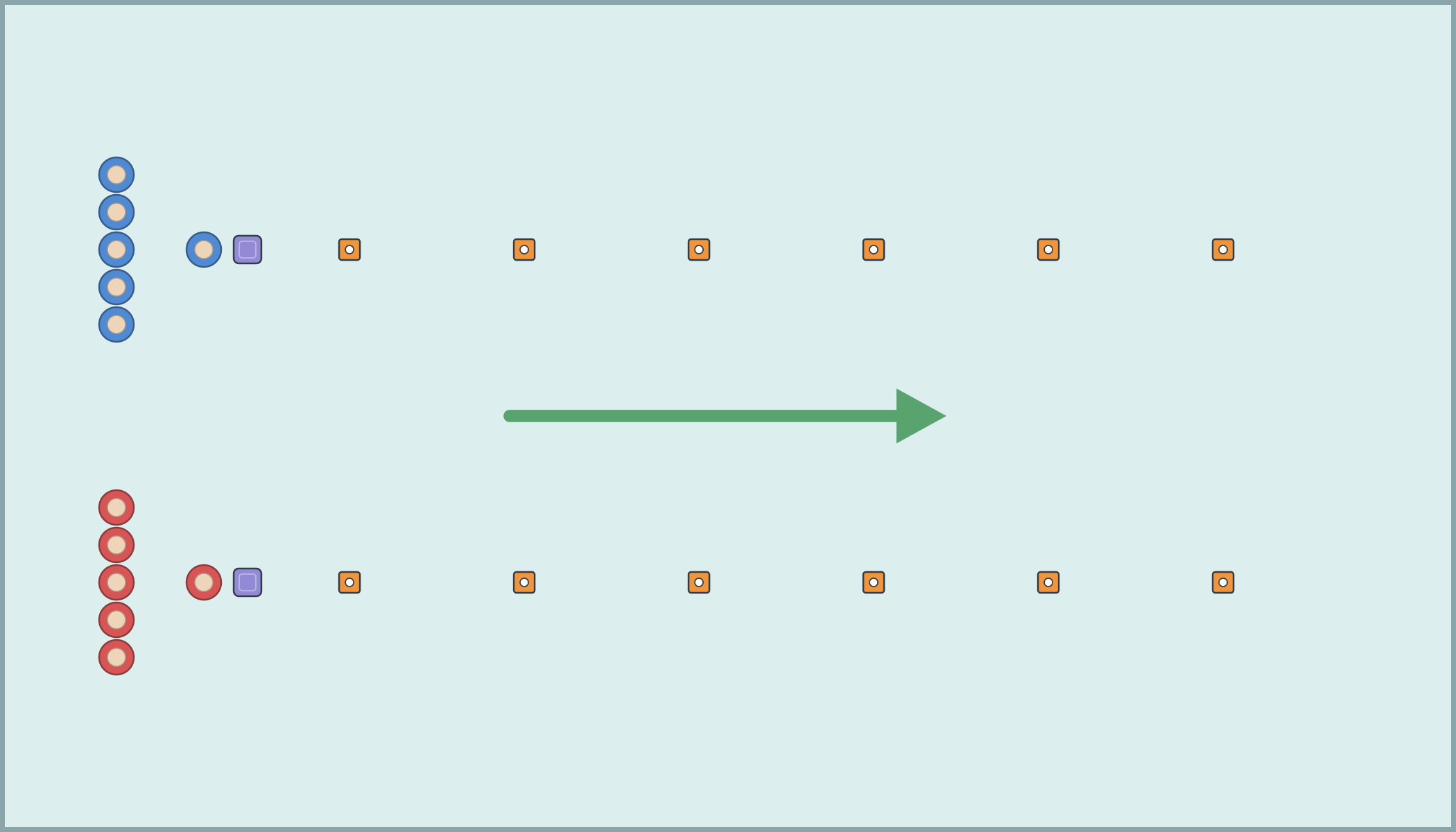
Four teams take turns running to the shared 'cookie jar' to get six cookies into their own nest.
Source: Playworks Game Guide
Ages 4–12 12 min PE hall
Each object from the bag means a different movement – keep track well and you will be first to the finish.
Source: Playworks Game Guide
Whole hall · 21 × 12 m · 12 items
What you need
A few small objects from a bag are each linked to a movement: a small ball means running, a ribbon means skipping, a bottle top means walking backwards. When the teacher holds up an object, everyone does the matching movement towards the finish. Whoever reaches the finish first may then think up a new movement for one object.
Start with just two or three objects and only add more once the class knows the links well.
The same game has to work for 6-year-olds and 11-year-olds. These are the dials you can turn.
For older groups, add an object that means: back to the start.
Increase the number of objects for more challenge.
Make up new movements yourselves, to suit the class or the season.
Based on the Dutch national PE curriculum (SLO), this lesson practises the following themes. The goals below belong to phase 3 · ages 9–12.
Tag games
Chasing a runner to tag them, while the runner tries not to be tagged
Dodgeball games
Threatening a runner by trying to hit them with a ball, while the runner tries not to be hit
Source: SLO, Inhoudslijnen primair onderwijs — Bewegingsonderwijs (July 2018). The link with this lesson is a suggestion based on the type of game and the description.
Make sure there is enough space between the children, especially for movements like running or walking backwards.
Verified teachers or guests (after approval) — real experiences
Not signed in?
Sign in with your school email address, or continue without an account — a moderator will then check your post before it appears.
Loading reviews…
Four teams take turns running to the shared 'cookie jar' to get six cookies into their own nest.
Source: Playworks Game Guide
The dice decides how far you have to go. Roll a six and it's a long way.
Source: Combinatiefunctionarissen Sport van de gemeente Zwartewaterland
The dino with the ball decides the movement; everyone joins in, or gets eaten.
Source: Playworks Game Guide