Cooperative game
Ant Line Reversal
The whole line has to reverse order without ever stepping off it.
Source: Playworks Game Guide
Ages 4–11 10 min PE hall, Outdoors, Classroom
Everyone stands on their own spot and together acts out a journey the class makes up itself — from mode of transport to destination.
Source: Playworks Game Guide
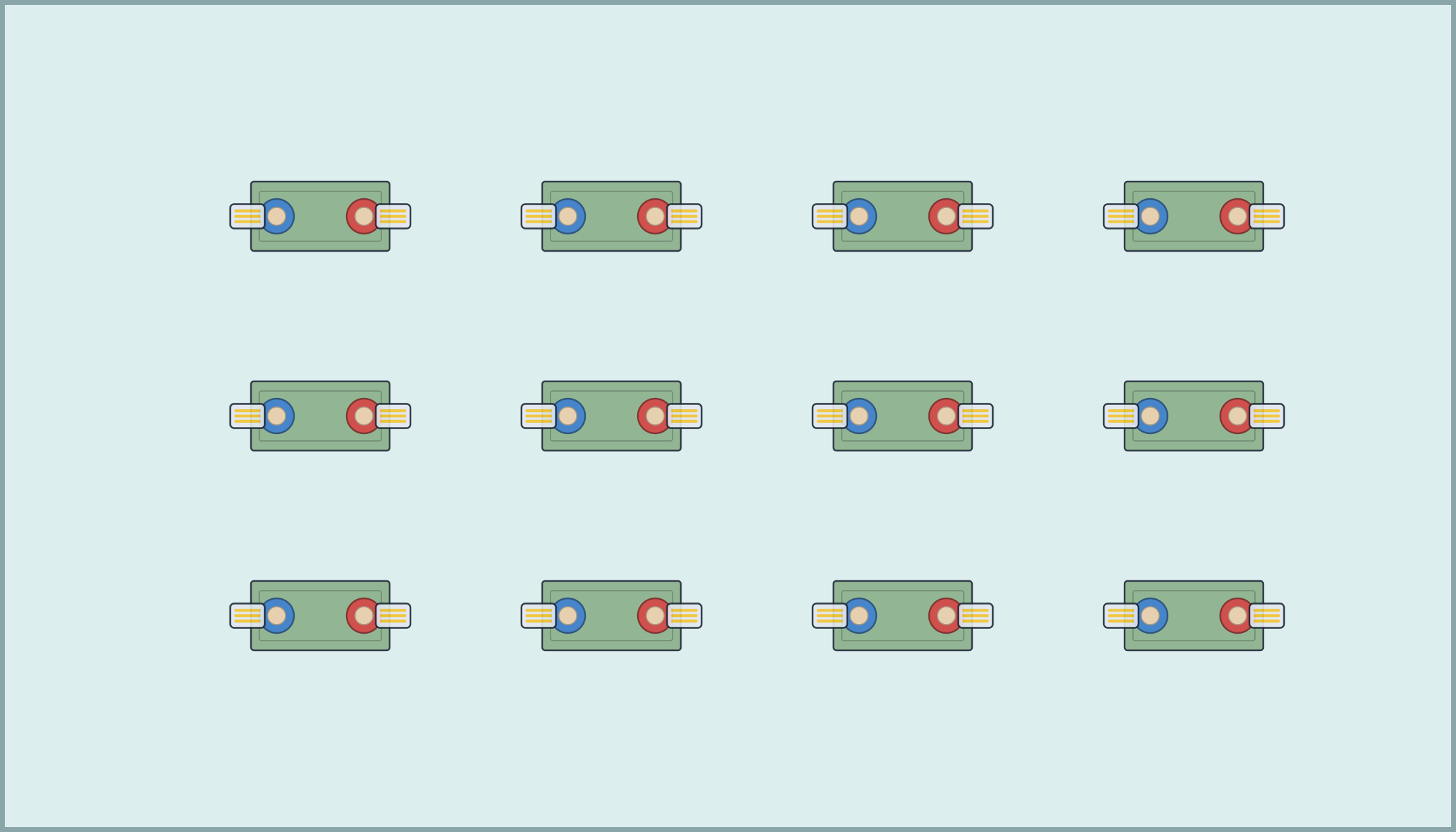
Whole hall · 21 × 12 m · 24 items
What you need
Each child has their own spot. In turn, one pupil chooses a destination (for example China) and another a way of travelling (for example swimming); everyone acts that out on their own spot for a few seconds. On arrival, you ask a few pupils what they see or do there, and the class acts that out too. In this way the class builds the whole journey itself.
Really let the class decide the content — the more of their own input, the longer their attention is held.
The same game has to work for 6-year-olds and 11-year-olds. These are the dials you can turn.
Link the destinations to a theme from the classroom, for example a geography lesson.
Have each child in turn think up a destination or way of travelling themselves.
Play a shorter version with just two or three destinations as a quick energiser in between.
Based on the Dutch national PE curriculum (SLO), this lesson practises the following themes. The goals below belong to phase 2 · ages 6–9.
Pushing or pulling an opponent to put them off balance, while they try to stay balanced
Source: SLO, Inhoudslijnen primair onderwijs — Bewegingsonderwijs (July 2018). The link with this lesson is a suggestion based on the type of game and the description.
Remind children to stay on their own spot while acting, so that nobody collides.
Verified teachers or guests (after approval) — real experiences
Not signed in?
Sign in with your school email address, or continue without an account — a moderator will then check your post before it appears.
Loading reviews…
The whole line has to reverse order without ever stepping off it.
Source: Playworks Game Guide
Everyone balances a beanbag on their head; if it falls off, you freeze until a classmate gives it back to you.
Source: Playworks Game Guide
Kneeling face to face: pull the bib out of your partner's waistband.
Source: Combinatiefunctionarissen Sport van de gemeente Zwartewaterland