Warm-up
Four-Minute Circuit
Four one-minute stations — jogging on the spot, jumping jacks, jogging laps and walking — and then rotate.
Source: Playworks Game Guide
Ages 4–12 10 min PE hall, Outdoors
One whistle blast means walk, two means run – listen carefully and keep your pace until the next signal.
Source: Playworks Game Guide
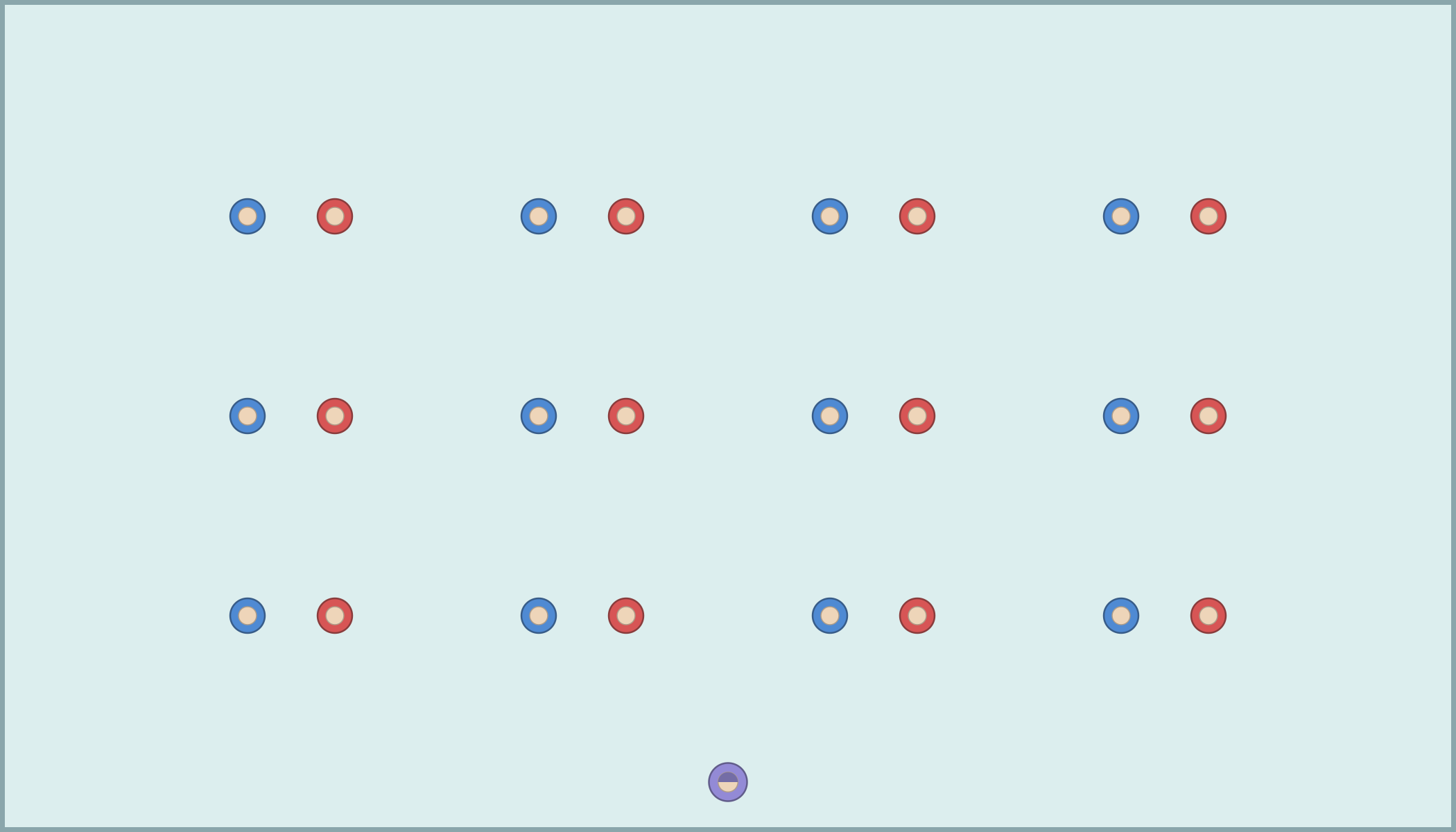
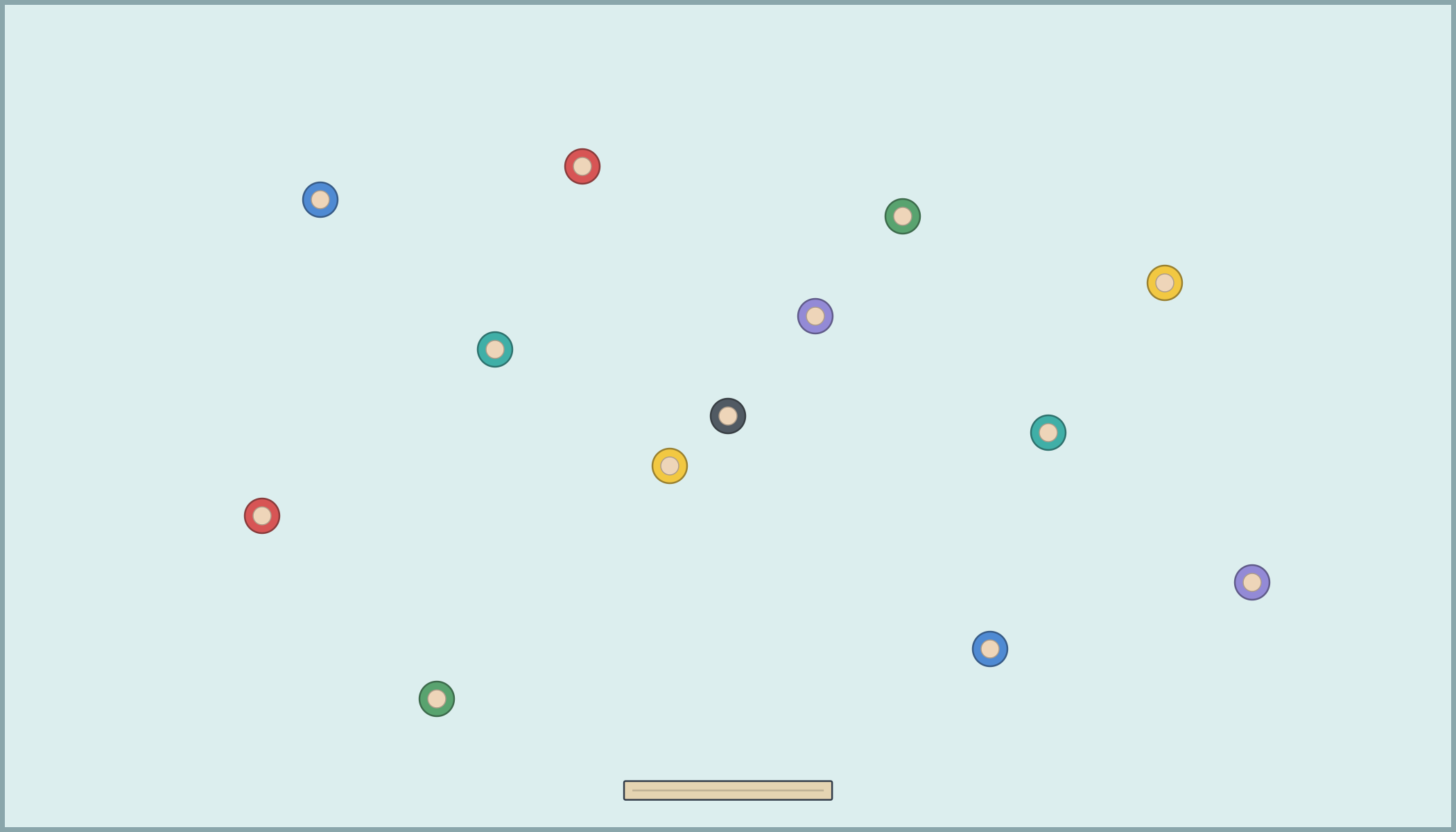
Whole hall · 21 × 12 m · 9 items
What you need
The class moves in a large loop around the hall or playground. On one whistle blast everyone walks, on two blasts (in quick succession) everyone runs. You decide how long each phase lasts – always changing, so nobody can predict when the next change will come. This way the group builds endurance in a playful way: the walking phases are for getting your breath back, the running phases challenge stamina. One long continuous whistle blast means the activity is over.
Run a little way with them yourself as a pacemaker – this often works better than just standing there shouting.
The same game has to work for 6-year-olds and 11-year-olds. These are the dials you can turn.
Add a third signal (three quick blasts) for a short sprint.
Have pupils keep track of their own laps and compare with last time at the end.
Fill in the running phase with side-stepping, skipping or walking backwards.
Leave enough space between pupils so that nobody bumps into each other when overtaking.
Verified teachers or guests (after approval) — real experiences
Not signed in?
Sign in with your school email address, or continue without an account — a moderator will then check your post before it appears.
Loading reviews…
Four one-minute stations — jogging on the spot, jumping jacks, jogging laps and walking — and then rotate.
Source: Playworks Game Guide
One moves slowly, the other mirrors as precisely as possible.
Source: PELessons.app editorial team
Memory with movements: find the two children doing exactly the same dance.
Source: Combinatiefunctionarissen Sport van de gemeente Zwartewaterland