Gymnastics
Acrogym with Task Cards
Children practise acrogym shapes in pairs or small groups using 45 cards with stars for the level, from ages 4–6 up to the upper primary years.
Source: KijkZo.nl (Mark & Kirsten Roth-Koch)
Ages 4–12 30 min PE hall
From feeling your first weight on your hands to a free-standing handstand against the wall – in three stations you work at your own level.
Whole hall · 21 × 12 m · 13 items
What you need
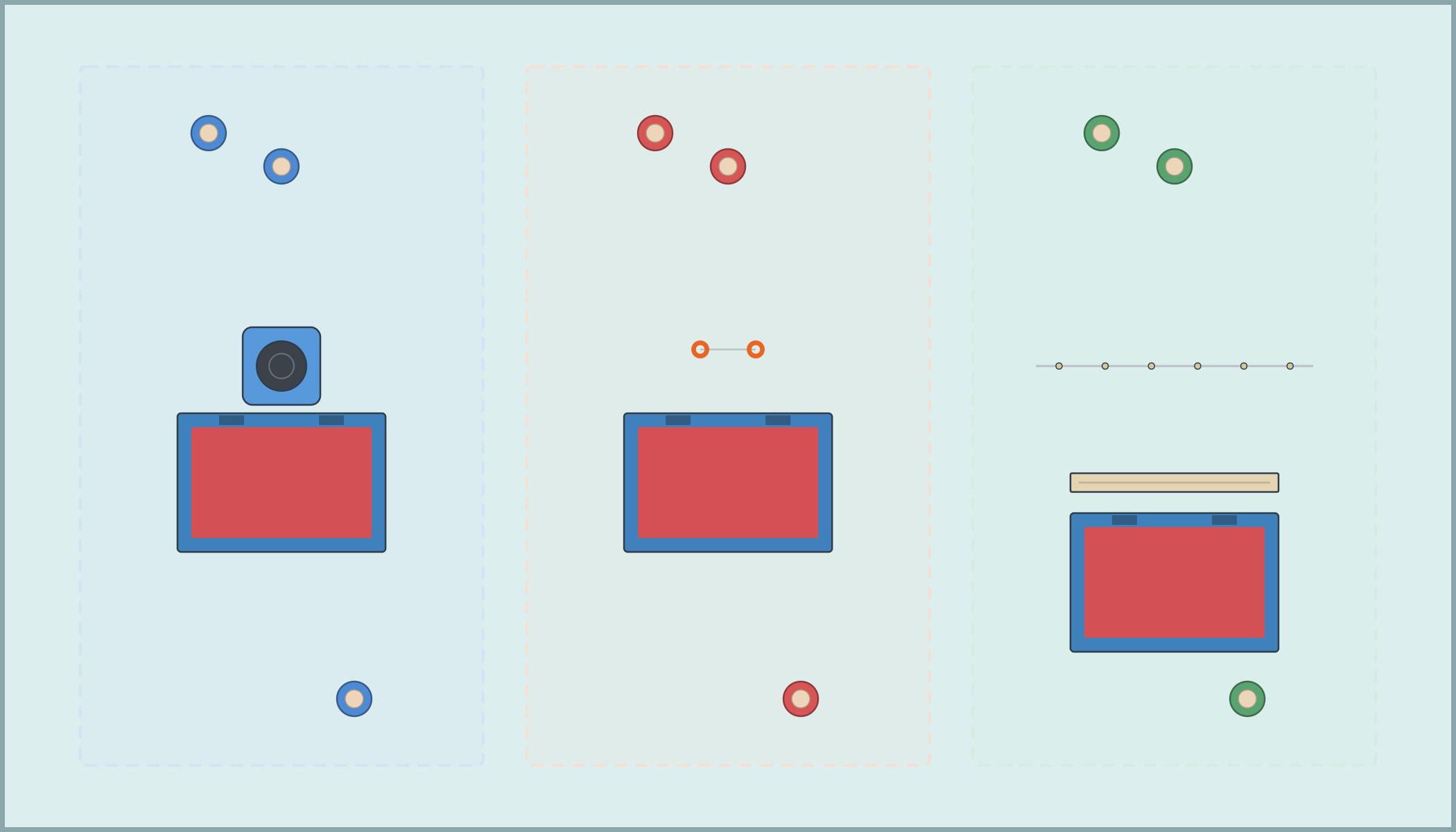
You build up a handstand in small steps, each with its own station. At station 1 you practise the ‘spider’: from standing, you place your hands on the floor and swing one leg briefly upwards, so you get used to the weight on your hands – without your whole body having to go upside down. Anyone who has mastered this tries the ‘straight spider’ with straight legs. At station 2 you work towards the wall with a helper: first with a classmate briefly supporting your legs, then independently against the wall, with your tummy towards the wall and your hands a hand's length away from it. At station 3, only for those who can already do the wall handstand well, you practise the free handstand without support, and possibly the roll-out from the handstand into a forward roll.
At station 2, have pupils work at fixed spots along the wall, with enough space between them, so nobody is in the way of someone else's legs.
The same game has to work for 6-year-olds and 11-year-olds. These are the dials you can turn.
For a pupil who still finds the wall handstand scary, have two or three classmates support them by holding the legs.
Have advanced pupils roll out of the free handstand into a forward roll – a great combination with the rolling lessons.
Have pairs tell each other what went well and what could be better, using the key points you demonstrated.
Based on the Dutch national PE curriculum (SLO), this lesson practises the following themes. The goals below belong to phase 3 · ages 9–12.
Turning over a bar
Starting a rotation to go head over heels, and slowing it down again in time
Rolling
Pushing off to go head over heels after placing your hands, and slowing the rotation down in time
Swinging on a swing
Moving along with a swing while sitting or standing, to make the swing bigger or keep it going
Hanging swings
Moving along with a swinging apparatus while hanging, to make the swing bigger or keep it going
Source: SLO, Inhoudslijnen primair onderwijs — Bewegingsonderwijs (July 2018). The link with this lesson is a suggestion based on the type of game and the description.
Make sure there is a soft mat at every station and that pupils cannot get their head against the wall in the wall handstand. Let pupils who find the idea of being upside down difficult simply stay at the spider – that is already a valuable step.
Verified teachers or guests (after approval) — real experiences
Not signed in?
Sign in with your school email address, or continue without an account — a moderator will then check your post before it appears.
Loading reviews…
Children practise acrogym shapes in pairs or small groups using 45 cards with stars for the level, from ages 4–6 up to the upper primary years.
Source: KijkZo.nl (Mark & Kirsten Roth-Koch)
The two most important skills for rescuing yourself safely in a fall: being able to rock calmly on your back, and being able to roll over your shoulder instead of falling.
Source: KijkZo.nl (Mark & Kirsten Roth-Koch)
Flying carpet as a warm-up, then mini trampoline, swinging and rope swinging.
Source: Harry van der Meer & Dennis Louter (gymlessenbasisonderwijs.nl)