Athletics
Running in Squares & BeeBall (Outdoors)
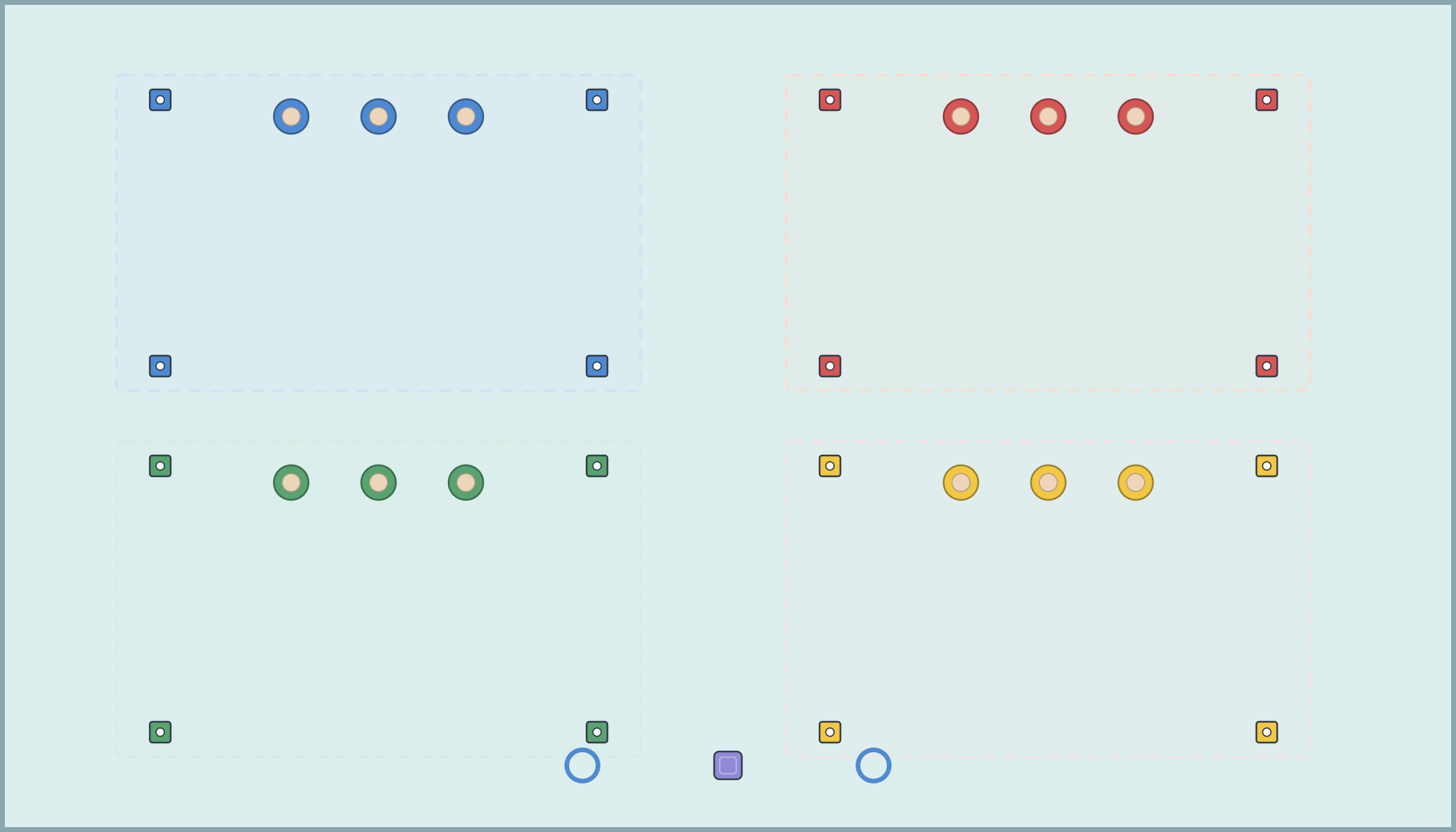
Outdoors: running exercises in four coloured squares, then BeeBall.
Source: Harry van der Meer & Dennis Louter (gymlessenbasisonderwijs.nl)
Ages 6–12 45 min Outdoors
Jog in a line at a gentle pace — the last person sprints to the front each time and sets the new pace.
Source: Playworks Game Guide
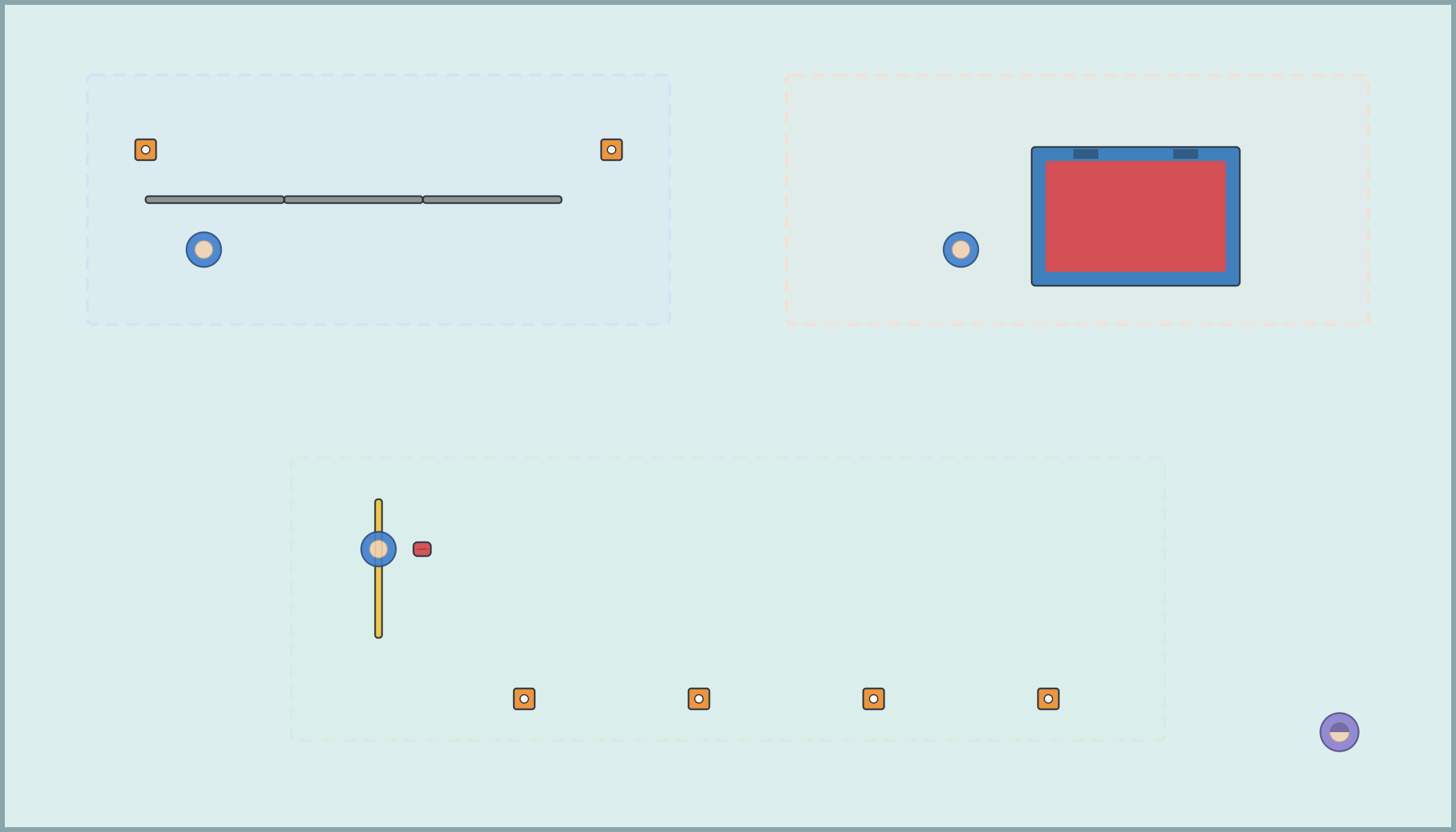
Whole hall · 21 × 12 m · 7 items
What you need
The class forms a single line and jogs one behind the other around at a calm, relaxed pace. As soon as you call 'change!', the last person in the line sprints past everyone to the front and becomes the new leader — who from that moment sets the (again calm) pace. In this way the group keeps moving at a pace that everyone can sustain, while everyone in turn gets a short sprint in the mix. A nice way to build endurance without it becoming a competition: the group runs together, after all, and nobody drops out.
Begin with a clearly calm pace before you let the first change happen — otherwise the line instantly becomes a running race.
The same game has to work for 6-year-olds and 11-year-olds. These are the dials you can turn.
Split a large class into two or three groups of 6-10 with their own running route.
Replace jogging with walking, skipping or jumping with a skipping rope.
Let the last person choose themselves when they sprint, instead of on your signal.
Based on the Dutch national PE curriculum (SLO), this lesson practises the following themes. The goals below belong to phase 3 · ages 9–12.
Running to get somewhere as fast as possible
Source: SLO, Inhoudslijnen primair onderwijs — Bewegingsonderwijs (July 2018). The link with this lesson is a suggestion based on the type of game and the description.
Have the sprinting pupil run well around the outside of the line, not straight through it, to prevent collisions.
Verified teachers or guests (after approval) — real experiences
Not signed in?
Sign in with your school email address, or continue without an account — a moderator will then check your post before it appears.
Loading reviews…
Outdoors: running exercises in four coloured squares, then BeeBall.
Source: Harry van der Meer & Dennis Louter (gymlessenbasisonderwijs.nl)
Sprint, long jump and throwing — and you compare with your own first round.
Source: PELessons.app editorial team
Children practise acrogym shapes in pairs or small groups using 45 cards with stars for the level, from ages 4–6 up to the upper primary years.
Source: KijkZo.nl (Mark & Kirsten Roth-Koch)